

Skip to content
Time for Reflection - One More Day

Donate Today

Support Reflection's Outreach!

Donate
Reflection by R. W. Dixon

Pre-Order Reflection

11/11/26 Make a wish!

Pre-Order
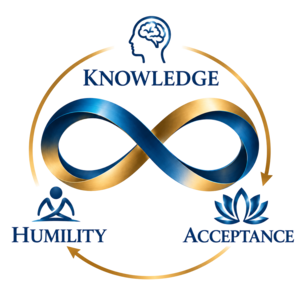
Knowledge - Acceptance - Humility

Want to learn more?

Learn more about Spatial Disambiguation.

Schedule a 1 on 1

What is Reflection Recovery?

The metaphysical understanding of an addicted mind through spatial disambiguation.

coverfinal600nocomp

Methodology.

The conscious accepts what our environment applies. Do we ever truly see that?

Spatial Disambiguation.

To assign in 3d an ambiguous map of a time and place from context and environment.

Metaphysical.

A branch of philosophy studying the fundamental nature of existence.

Introspective.

Examining ones own thoughts.

The Parable

A master, a student, a philosopher and our self. Coalesced.

Foundation

4 places of introspection and our center.

Coalesce

To come together to be a mass or a whole.

Powerful.

Your mind can be made whole, powerful over addiction

Reflection_ Knowledge, Acceptance, Humility

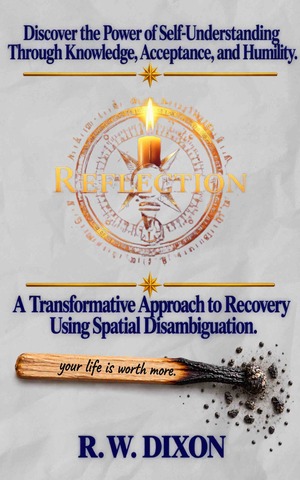
Reflection, by R. W. Dixon — now available for pre-order

Reflection - A Transformative Approach to Recovery Using Spatial Disambiguation is now available for pre-order!

Pre-ordered ebooks will be delivered in ePub on November 11, 2026. The book will be available on major platforms, with the paperback following shortly after the November 11 release.

Why your purchase matters

Reflection Recovery is supported in part by sales of this book. 100% of the royalties from sales on Apple Books and Google Play Books go directly to support Reflection Recovery's mission and continued education.

That support helps Reflection Recovery reach those in recovery, the frontline in Peer and clinical recovery models and to ensure that our reach to those individuals is sustained. 

R. W. Dixon receives no compensation from Reflection Recovery has proceeds from Amazon Kindle and remaining platforms support his ongoing work and initiatives. Paperback copies will be available for purchase using both models, and Reflection Recovery has a strong initiative to distribute and support this model of introspection as a Recovery Pathway.  If you are an individual that offers guidance to those seeking recovery, Reflection Recovery wants to help, so please reach out!

What is Reflection?

Reflection presents recovery as an architecture of attention — how where we stand in relation to our own experience determines what recovery is possible.

It is built on three pillars: Knowledge, Acceptance, and Humility. At its center is spatial disambiguation: noticing where attention stands in relation to experience, especially in the space between a trigger and a reaction, and learning to stand steadier there.

"Your life is worth more."

Read the opening, free

Read the complete Prologue and Introduction, free, at reflectionrecovery.org/freebie

Book details

    • Title: Reflection: A Transformative Approach to Recovery Using Spatial Disambiguation
    • Author: R. W. Dixon
    • Release: November 11, 2026 (ePub delivery on release day; paperback shortly after)
    • Formats: eBook and paperback
    • Order on Apple Books: 
    • Order on Google Play Books: 
    • Non-Profit Print:
    • Pre-order on Kindle Books: a.co/d/04MdsngP
    • Order Paperback Author: 
    • More about the community: reflectionrecovery.org/magicwall
Reflection e-Reader

The Metaphysics of Healing: Where Are You Located in Your Own Mind?

We spend our entire lives navigating physical space. We know how to navigate streets, arrange furniture in a room, and maintain physical distance when someone stands too close. Yet, when it comes to our internal worlds, most of us live in complete spatial chaos.

We allow past heartbreaks, old conditioning, and sudden fears to occupy the exact same space as our present self. We live merged with our noise.

In my book Reflection, I explore how personal recovery—whether from addiction, trauma, or chronic burnout—is ultimately a problem of metaphysical positioning. When you are stuck in a habit loop, it is not because you are weak; it is because you are lost within your own internal geography.

Consider what happens during a sudden emotional trigger. Something small occurs in your day, and instantly, a flood of old insecurity or panic takes over. In that moment, where are "you"?

You have been displaced. The old memory and the present moment have collided, blurring your boundaries and driving your choices on autopilot.

To reclaim your agency, you must learn introspective spatial disambiguation—the art of separating overlapping internal boundaries and returning to your central coordinate.

Here is how you begin mapping your internal space:

  • Recognize the Overlap: Notice when an emotion feels all-consuming. That sensation of being "overwhelmed" is simply spatial overlap—your core self has merged with the feeling.
  • Name the Distance: Remind yourself that whatever you can observe cannot be your core identity. If you can observe anxiety, you are the thing watching the anxiety, not the anxiety itself.
  • Re-center Your Location: Physically take a deep breath, ground your feet on the floor, and visualize stepping back three paces inside your own mind. Look at the situation from this newly created space.

When you master your internal coordinates, you discover that peace isn't the absence of noise or conflict. Peace is simply having enough room inside yourself to stand clear of it.

Reflection

Reflection: A Transformative Approach to Recovery Using Spatial Disambiguation


An excerpt from "Methodology"

    "I began the journey defining the Foundation, Principles and the Parable a very long time ago. It has been told, storied, and shared to many over the years, and on my mind to pen so it can be shared to others. I trust its application and utility, and believe it’s time that others gain empowerment over Substance Use Disorder via it’s method and principles etc. As such defining the people places and things that trigger relapse, prevent abstinence or in other ways hinder our life. Our way of thinking is what needs to change. The people, places and things are what ruptures our foundation, the why behind our way of thinking. Many of us have learned this from other pathways, changing our way of thinking, changing people places and things etc. It isn’t enough to just do it. Having an understanding of why is most important to sustainable recovery, that’s where Reflection succeeds, where you’ll succeed. We paint a picture with every day, in every moment, every laugh and cry, every decision a fleck a on our canvass. Reflection separates our strokes, we learn to impasto, thick lines, alla prima, soft blending, and sgraffito, scratching the surface to unveil layers. We gain vision, and have a brush in hand, and an understanding of our colors, we step back and look at our canvass as ours, knowing we’re an artist and deliberate with our strokes. Reflection is the light in the studio, a stretch maybe, but the stand in which our canvass sits. It is a light that distinguishes orange from red or deep yellow for the first time, it tilts the pallet into the light as we mix, a steady hand to sgraffito. We learn to apply these techniques with Foundation, Knowledge, Humility, Coalesce, and through The Parable, we learn to see our self in absolute truth and clarity. Together the complexity of colors in our life is shown in natural light. Emerging, the brightest colors, a perfect contrast and perfect shades, urging the hand to perfect it’s stroke. As we Coalesce allowing our past, present and future self to become aware the green and yellow blend to paint the most beautiful sky. Our conscious and subconscious also become aware, helping to ensure natural light is working with us and not against us.."