

Skip to content
Time for Reflection - One More Day

Donate Today

Support Reflection's Outreach!

Donate
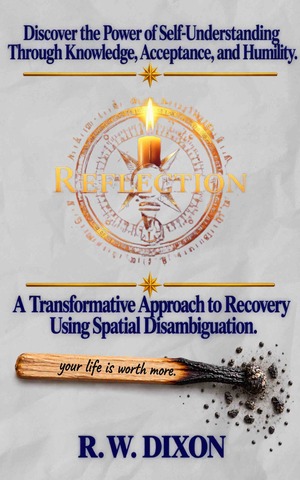
Reflection by R. W. Dixon

Pre-Order Reflection

11/11/26 Make a wish!

Pre-Order
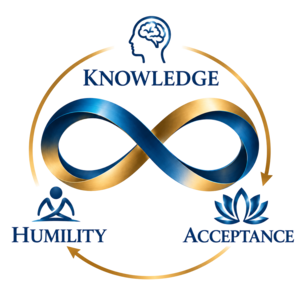
Knowledge - Acceptance - Humility

Want to learn more?

Learn more about Spatial Disambiguation.

Schedule a 1 on 1

What is Reflection Recovery?

The metaphysical understanding of an addicted mind through spatial disambiguation.

coverfinal600nocomp

Methodology.

The conscious accepts what our environment applies. Do we ever truly see that?

Spatial Disambiguation.

To assign in 3d an ambiguous map of a time and place from context and environment.

Metaphysical.

A branch of philosophy studying the fundamental nature of existence.

Introspective.

Examining ones own thoughts.

The Parable

A master, a student, a philosopher and our self. Coalesced.

Foundation

4 places of introspection and our center.

Coalesce

To come together to be a mass or a whole.

Powerful.

Your mind can be made whole, powerful over addiction

Knowledge, Acceptance & Humility

Our Methodology: The Architecture of Reflection

True recovery is not a simple matter of willpower or behavioral compliance. It is a systematic process of cognitive realignment. When an individual navigates the challenges of substance use recovery, stress or situational ambiguity can cause their core identity and their environmental triggers to occupy the exact same space in the mind. In those moments, you do not just experience : anxiety or temptation—you become it. To break this automated cycle, Reflection Recovery introduces a framework known as Metaphysical Spatial Disambiguation. This methodology acts as a conscious wedge driven between a raw environmental cue and your brain's automatic reflex, shifting you from passive reaction to deliberate, goal-directed choice. Our framework is built upon three foundational pillars that dictate how human experience is transformed into lasting recovery

Knowledge

Knowledge is the quintessential component of our methodology. It represents the objective spectrum of what is known and what remains unknown, serving as a continuous invitation toward self-discovery. Without structural knowledge, the mind defaults to blind reactions. By mapping out the precise relationship between who you have been, who you are today, and who you are becoming, knowledge provides the empirical data required to navigate complex real-world experiences safely.

Acceptance
Knowledge alone is static; it requires a mental vessel to become functional. Acceptance is the cognitive capacity that allows your mind to hold your reality without judgment. It gives you the immediate psychological strength to sit with an ambiguous experience, process the information you have gathered, and deploy it intentionally today, tomorrow, and into the future.
Humility

Humility is the deliberate preservation of capacity within the self. It is a space left open, an active recognition that your current understanding is not exhaustive and that more knowledge is required. In the neurobiology of recovery, humility is a structural necessity; it prevents the premature cognitive certainty that leads to autopilot behavior, keeping the mind alert, adaptive, and receptive to new perspectives.

candle-in-hand-1416268

From Auto Pilot To Goal-Directed Action

When these three pillars guide your perception, you move from a Primary Observation (merely registering an environmental setting or trigger) into a Secondary Observation (the active, conscious awareness of your relationship to that setting).Instead of letting your brain automatically fill in the blanks using old habits and historical trauma, our methodology trains you to practice deliberate pattern separation. You learn to look at a superficially familiar trigger and recognize that your current resolve, your current companions, and your long-term stakes are entirely novel. By masterfully separating the present space from past shadows, you strip the automated habit system of its control, empowering your brain's goal-directed pathways to choose your future self.

Reflection by R. W. Dixon

Deepen Your Practice

The complete neurobehavioral framework, philosophical origins, and clinical applications of this methodology are fully explored in the forthcoming book, Reflection, by R. W. Dixon, launching November 11th.

Order Today